Products
Olive Oil
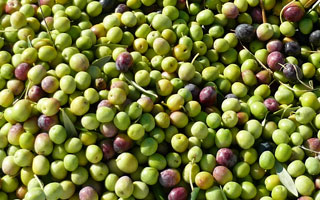 The
fruit is handpicked as well as raked off the trees using pneumatic
combs and tarps to collect the olives. The harvest typically run
thru November, and the exact dates depend upon the variety of olive
and weather for the year. We process all of our fruit the same day
or within 24hrs of harvest to assure the best flavor profile at the
Chacewater Olive Mill.
The
fruit is handpicked as well as raked off the trees using pneumatic
combs and tarps to collect the olives. The harvest typically run
thru November, and the exact dates depend upon the variety of olive
and weather for the year. We process all of our fruit the same day
or within 24hrs of harvest to assure the best flavor profile at the
Chacewater Olive Mill.
Once the oil is pressed it undergoes a natural gravity separation that takes approximately six weeks. The oil is stored in stainless steel containers during the separation process. Once the oil has cleared it’s ready to be bottled.
All oils are independently lab certified for Free Fatty Acid and Peroxide as well as other tests to verify purity. We have exceeded all quality standards for Extra Virgin Olive Oil since our inception. In addition the oil is blind taste tested by experts at the California Olive Oil Council and certified Extra Virgin.
The Villa Barone is a certified organic farm. Our trees get fresh air, water, organic compost and that’s it. There are no pesticides, herbicides or any other inputs. We currently have 9 varieties of olives used principally for Extra Virgin Olive Oil production, as well as several for canning.
For our “Tuscan” style oil we blend Frantoio, Lecchino, Pendolino and Maurino varieties. We also offer a monocultivar Arbequina and monocultivar Kalamata olive oils. We recently added Taggliasca and Nocellara olive trees and we hope to begin harvesting these trees in a few years. Sevilliano & Kalamata trees are being grown to assure a strong supply of high quality olives for our olive food products we plan to bring on line in the near future.
Soap
We use the cold processing method to make soap. This means once the fats and oils are liquefied no additional heat is added to complete the process. The reaction that creates the soap supplies the heat necessary to complete the process. We use the cold processing method to make soap. This means once the fats and oils are liquefied no additional heat is added to complete the process. The reaction that creates the soap supplies the heat necessary to complete the process.
Soap is made by converting fats (in our case vegetable fats and oils, we never use animal fats) in the presence of a sodium hydroxide solution. The fats and the oils are consumed along with the sodium hydroxide, and the soap is created. All of our soaps are formulated with 8% more fat than required to consume all the sodium hydroxide. This process, known as super fatting, assures that all the sodium hydroxide is consumed. The excess fat or oil also gives the soap a creamier texture.
Our 4oz Lather Bar is made with 50% EVOO. Using 50% olive oil creates a gentle soap. We also add coconut oil and palm oil for great lather as well as Shea butter to leave your skin soft and bees wax to make the bar long lasting. A light touch of Lavender essential oil is added for fragrance.
Honey
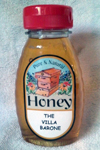 Our
3 new hives were started in September of 2011 and the bees have been
busy building their hives and making honey. The 160 acre ranch and
surrounding region is predominantly wild brush, plants and weeds
accentuated by lots of star thistle in the olive orchard. The bees
love it and it makes a very light and delicious honey. Available in
8oz bottles.
Our
3 new hives were started in September of 2011 and the bees have been
busy building their hives and making honey. The 160 acre ranch and
surrounding region is predominantly wild brush, plants and weeds
accentuated by lots of star thistle in the olive orchard. The bees
love it and it makes a very light and delicious honey. Available in
8oz bottles.
Sunstainable Farming
On September 29th 2006, The Villa Barone received Organic Certification for its olive growing operation from the California Certified Organic Farmers. Keeping in line with the company charter of providing the purest and finest products, the certification is another step in the goal of making the worlds finest Extra Virgin Olive Oil. The trees were planted on virgin (never farmed) soil. While the fruit has been grown using organic methods since its inception, the certification means we have demonstrated that we meet the goals of the USDA National Organic Plan and have an ongoing process and plan to sustain this activity. What this means to the consumer is that Villa Barone grown fruit has no pesticides, herbicides, or processed fertilizers. Our trees receive sunlight, water and several feedings a year of organically certified compost as well as organic fish emulsion. We also use organically certified ground cover crops to augment fertilization, improve soil tilth and control erosion.